
2026-09-14 ·
Attic Mold And Cedar Shake Roofs In Older Lynnwood Neighborhoods
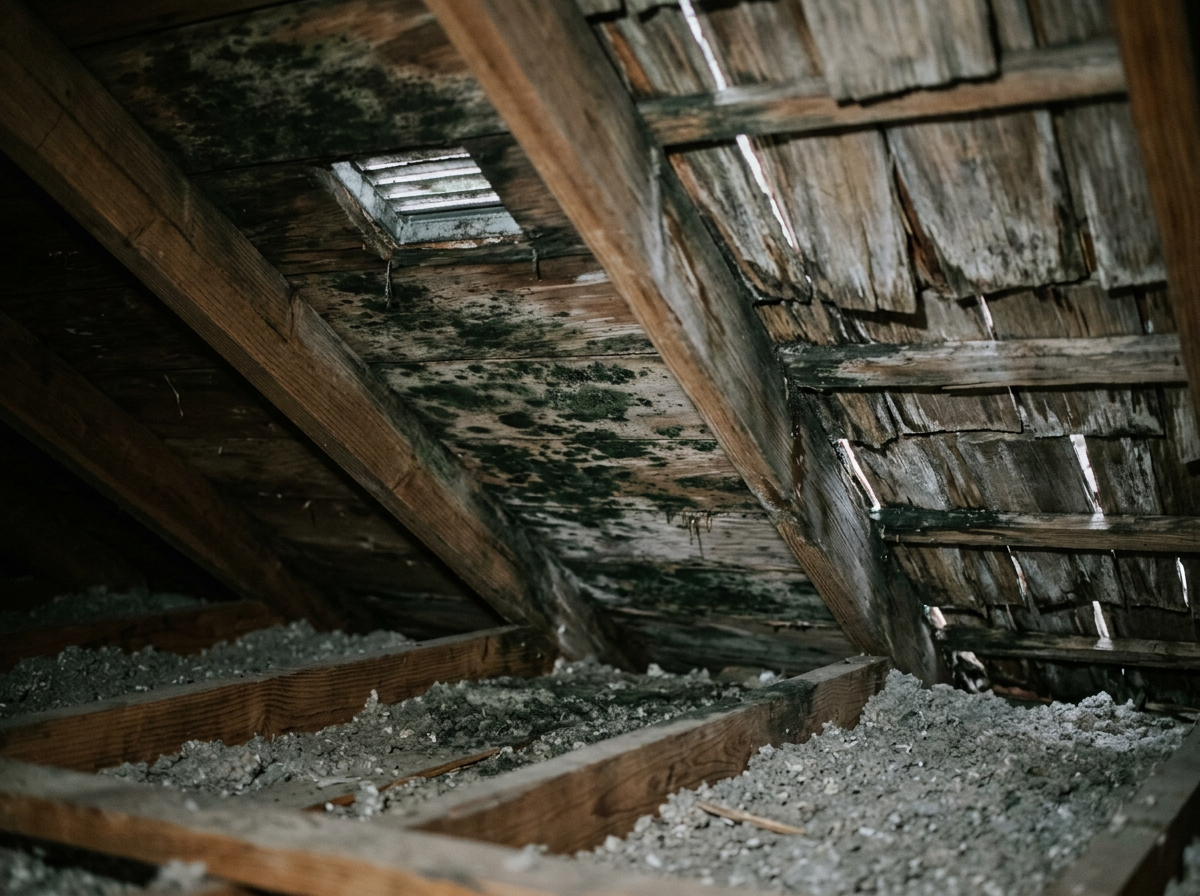
Cedar shake roofs on homes built before the 1980s in Lynnwood commonly produce attic mold because the shakes absorb and hold rain while original ridge and soffit vents prove too small for the roof area. The combination of blocked eaves from added insulation and bathroom fans routed into the attic space creates the exact moisture buildup that appears as dark staining on north-facing sheathing. Homeowners who address only the visible growth without correcting airflow see the same pattern return within two winters.
Cedar Shake Characteristics in Lynnwood Homes
Cedar shakes on roofs from the 1950s through the 1970s in neighborhoods near 68th Avenue West expand and contract with repeated wetting, allowing water to reach the felt and sheathing beneath. Once moisture reaches the attic side, the shakes continue to release it slowly even after the rain stops. This slow release keeps relative humidity above 60 percent for days at a time during the long wet season west of the Cascades. Older homes also lack modern drip edges and step flashing details that newer roofs use, so wind-driven rain enters at valleys and eaves more readily. The result is a roof assembly that stays damp longer than asphalt-shingle roofs in the same blocks.
Ventilation Shortfalls Common to These Roofs
Many Lynnwood attics under cedar shakes were built with only a single ridge vent and minimal soffit openings, ratios that fall short of the 1:150 net free area now recommended for the climate. Homeowners later added insulation that covered the remaining eaves, cutting off the little intake air that existed. Bathroom exhaust fans vented directly into the attic rather than through the roof further load the space with warm, moist air that condenses on the north slope. When soffits are blocked by insulation or debris, the stack effect pulls replacement air from the house itself, carrying additional humidity upward. These layered changes turn a marginal ventilation system into one that cannot dry the attic after a typical November through February stretch of rain.
How Source Correction Prevents Repeat Growth
Cleaning visible mold without restoring proper airflow leaves the same moisture sources in place, so staining reappears on the sheathing within one or two wet seasons. Restoring intake air at the eaves, rerouting exhaust fans through the roof, and ensuring ridge vents remain clear address the conditions that allowed mold to start. In homes where bare soil in the crawl space contributes to the stack effect, sealing and insulating that space reduces the volume of moist air drawn into the attic. These steps focus on the building assembly rather than surface treatments alone. Attic Mold Removal work that includes ventilation corrections produces longer intervals between any future findings.
Checking and Monitoring Older Attics
A practical first step is to look for dark staining along the north slope and around plumbing vents during a calm, dry period. Homeowners can also note whether insulation touches the roof deck at the eaves or whether exhaust ducts terminate inside the attic. Recording humidity readings over several weeks shows whether levels stay elevated after rain events. How To Check Your Attic For Mold In Lynnwood Homes outlines a repeatable inspection sequence that fits these older roof assemblies. Once airflow is corrected, Preventing Mold Regrowth After Attic Repairs In Lynnwood explains how to maintain the improved conditions through seasonal checks.
Washington Mold Solutions at 19921 68th Ave W Ste 103, Lynnwood, WA 98036 works with homeowners in these neighborhoods to identify the specific ventilation shortfalls tied to cedar shake roofs and to plan repairs that match the original construction details.