
2026-09-14 ·
Why Lynnwood Attics Develop Mold During Winter
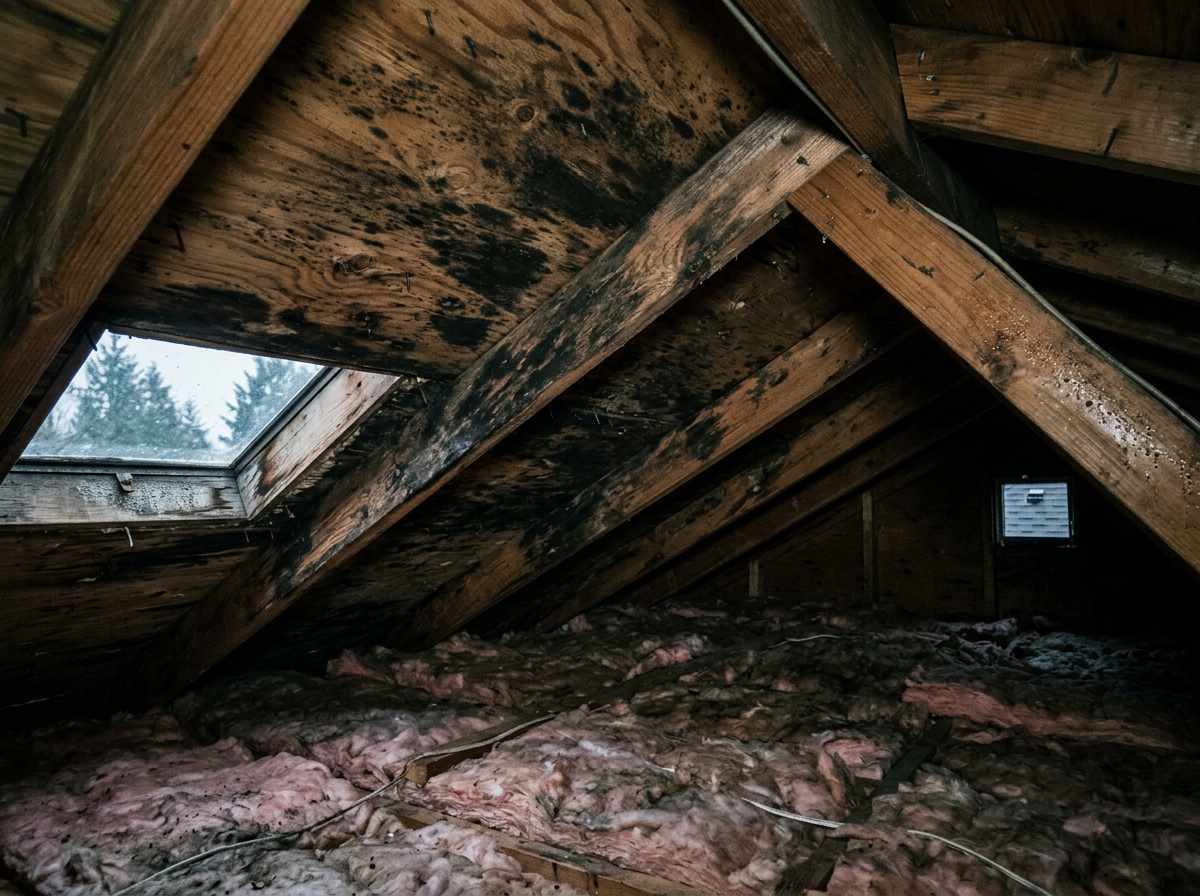
Lynnwood attics develop mold during winter when indoor air carrying moisture rises into spaces with inadequate ventilation and cold roof surfaces that allow condensation to form on sheathing and rafters. This occurs regularly because many homes have bathroom or kitchen fans venting directly into the attic instead of to the exterior, combined with insulation that blocks soffit intake and north-slope roof areas that stay colder longer.
Ventilation Shortfalls That Trap Moisture
Many Lynnwood homes built before updated codes have insulation installed over eaves or soffits packed with debris that prevents air from entering at the roof edges. When exhaust fans vent into the attic rather than through the roof or gable, the added moisture has nowhere to escape. This setup turns the attic into a moisture trap once outdoor temperatures drop and the roof deck cools below the dew point of the rising air. Over time the repeated wetting supports mold on wood members and insulation surfaces. Homeowners can inspect visible fan ducts to confirm they terminate outside and check that soffit vents remain clear of insulation or debris. These steps identify the mechanical causes before growth spreads further.
Role of Nine Months of Maritime Damp West of the Cascades
West of the Cascades, Lynnwood experiences extended periods of high outdoor humidity that limit natural drying in attics even during cooler months. When combined with indoor heating that drives warm moist air upward through the stack effect, the roof deck temperature often falls below the point where condensation occurs on the underside. North-facing slopes receive less sun and stay damp longer, creating visible staining patterns that indicate ongoing moisture. Bare soil in crawl spaces below adds another moisture source that travels upward through the house. Without correcting these paths, simply removing visible mold leaves the same conditions in place for the next winter cycle. Checking that insulation does not cover intake vents and confirming ridge or gable exhaust remains unobstructed helps restore airflow.
Why Source Correction Matters More Than Cleaning Alone
Cleaning mold from attic surfaces without fixing the ventilation or moisture entry points allows the same condensation cycle to restart each winter. In Lynnwood homes the combination of blocked soffits and fan ducts routed into the attic keeps relative humidity elevated near the roof deck long after the outdoor air has cooled. This sustained dampness supports repeated growth on rafters and sheathing. Practical evaluation includes tracing exhaust ducts to their termination point and ensuring at least 1 inch of clearance remains at the eaves for intake air. Addressing these details stops the moisture supply that cleaning alone cannot eliminate. For targeted attic work, see the details on attic mold removal. Readers seeking to adjust airflow may also review improving attic ventilation to reduce mold risk in Lynnwood.
Practical Steps to Identify Winter Moisture Sources
Start by examining bathroom and kitchen exhaust ducts to verify they exit the building rather than terminating inside the attic. Next inspect the perimeter of the attic floor for insulation that has been pushed against the soffits, blocking intake. Look for dark staining along the north slope of the roof deck, which signals repeated condensation. In homes with crawl spaces, note whether soil remains uncovered, allowing additional vapor to rise through the living space. These checks reveal the specific conditions that lead to winter mold in Lynnwood attics. Once identified, correcting the ventilation paths and moisture sources provides lasting control rather than repeated surface cleaning.