
2026-09-14 ·
How To Check Your Attic For Mold In Lynnwood Homes
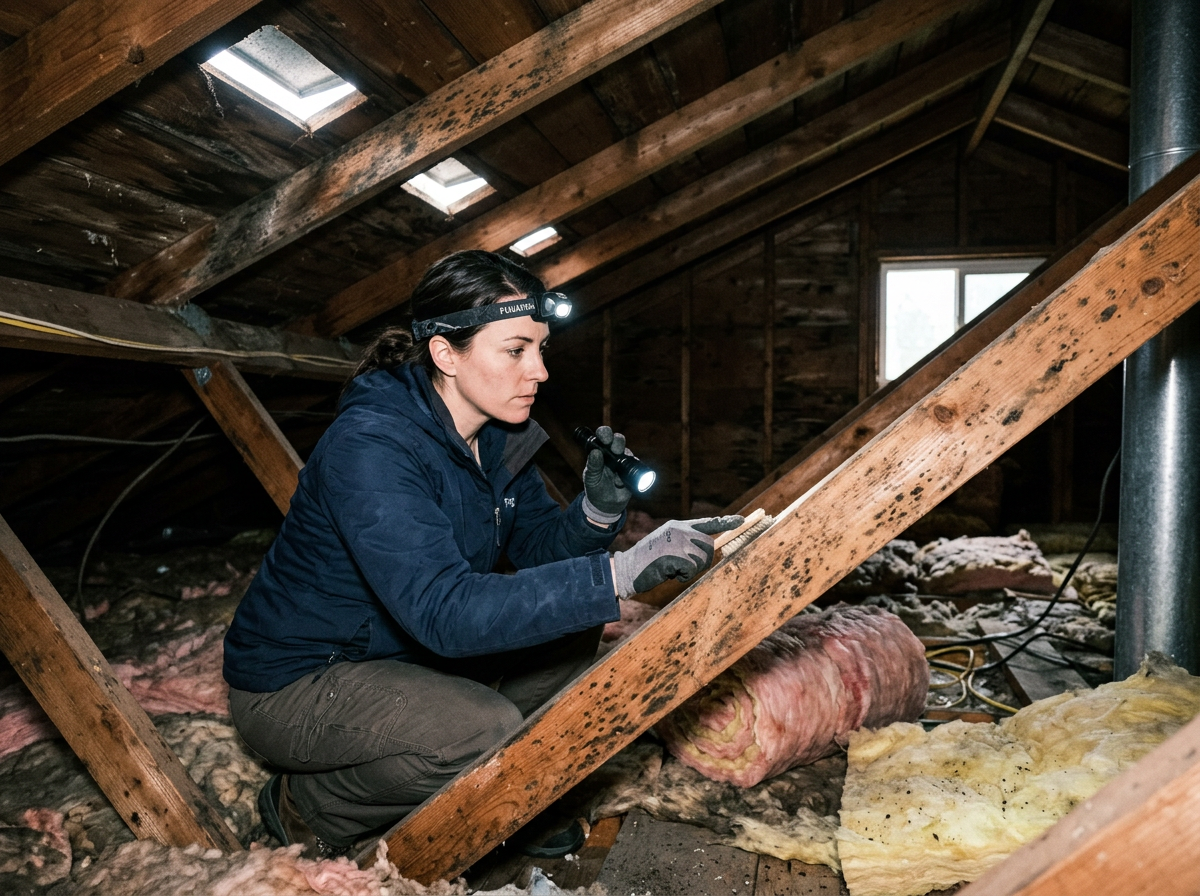
Lynnwood homeowners can check for attic mold by first accessing the space safely and scanning for dark staining along the north slope of the roof deck along with musty odors or soft insulation. These signs often trace back to ventilation shortfalls like bathroom fans venting directly into the attic or insulation blocking soffit vents, which trap the nine months of maritime damp typical west of the Cascades. Once inside, note any daylight visible through the eaves or uneven insulation coverage that allows warm air to rise via the stack effect from bare-soil crawl spaces below. Document findings with photos and measurements of affected areas before deciding on next steps such as professional evaluation.
Spotting Common Visual Indicators
Lynnwood attics frequently show mold growth along roof sheathing where north-facing slopes receive less sun and hold moisture longer. Look for black or gray patches on wood surfaces and discoloration on fiberglass batts that have absorbed condensation from poor airflow. Check rafters and collar ties for fuzzy growth or water streaks running toward the eaves, especially where soffits are blocked by insulation pushed too far forward. Compare both sides of the attic to identify patterns that match prevailing wind and rain directions in Snohomish County. Note the condition of any existing vapor barrier on the floor, checking for gaps wider than a few inches that allow humidity from living spaces to reach the roof deck. These observations help map whether the issue stems from mechanical ventilation problems rather than isolated leaks.
Evaluating Ventilation and Airflow Issues
Proper attic ventilation in Lynnwood requires clear intake at the eaves and exhaust near the ridge to handle the region's consistent damp air. Inspect bathroom and kitchen exhaust fans to confirm they terminate outside rather than dumping moist air into the attic cavity. Measure soffit openings to ensure they are not covered by insulation or debris, which reduces the intended ratio of intake to exhaust. Walk the perimeter and look for ridge vents that may be clogged with leaves or bird nests after winter storms. In homes with gable-end vents, verify screens remain intact and unobstructed so air can move freely across the space. These checks reveal why simply cleaning visible growth without fixing airflow often leads to recurrence within a single damp season.
Linking Attic Conditions to Crawl Space Sources
Many Lynnwood attics develop mold because moisture rises from below through the stack effect when crawl spaces lack proper ground covers. Examine the attic floor insulation for signs of settling or compression that indicate repeated wetting from below. Trace any pipes or ducts passing through the ceiling to see if condensation forms where warm air meets cooler attic temperatures. Review how bathroom fans and dryer vents route, since short or blocked runs can push humidity upward instead of outward. Homeowners can read more on this connection in the article How Crawl Space Issues Contribute To Attic Mold In Lynnwood. Addressing the lower level often prevents the attic from becoming a repeat problem after initial cleaning.
Deciding When Professional Assessment Helps
After completing a visual check, compare your findings against typical patterns seen in Western Washington homes where mechanical fixes resolve most cases. If staining covers more than isolated boards or insulation feels consistently damp, schedule a detailed inspection through mold inspection and testing services. For confirmed growth tied to ventilation shortfalls, review options for attic mold removal that include source correction rather than surface treatment alone. Homeowners who want to monitor air quality after discovery can follow guidance in When To Test Air Quality After Attic Mold Discovery In Lynnwood. Keep records of all observations to share with technicians who visit the address at 19921 68th Ave W Ste 103 in Lynnwood.