
2026-09-14 ·
How Crawl Space Issues Contribute To Attic Mold In Lynnwood
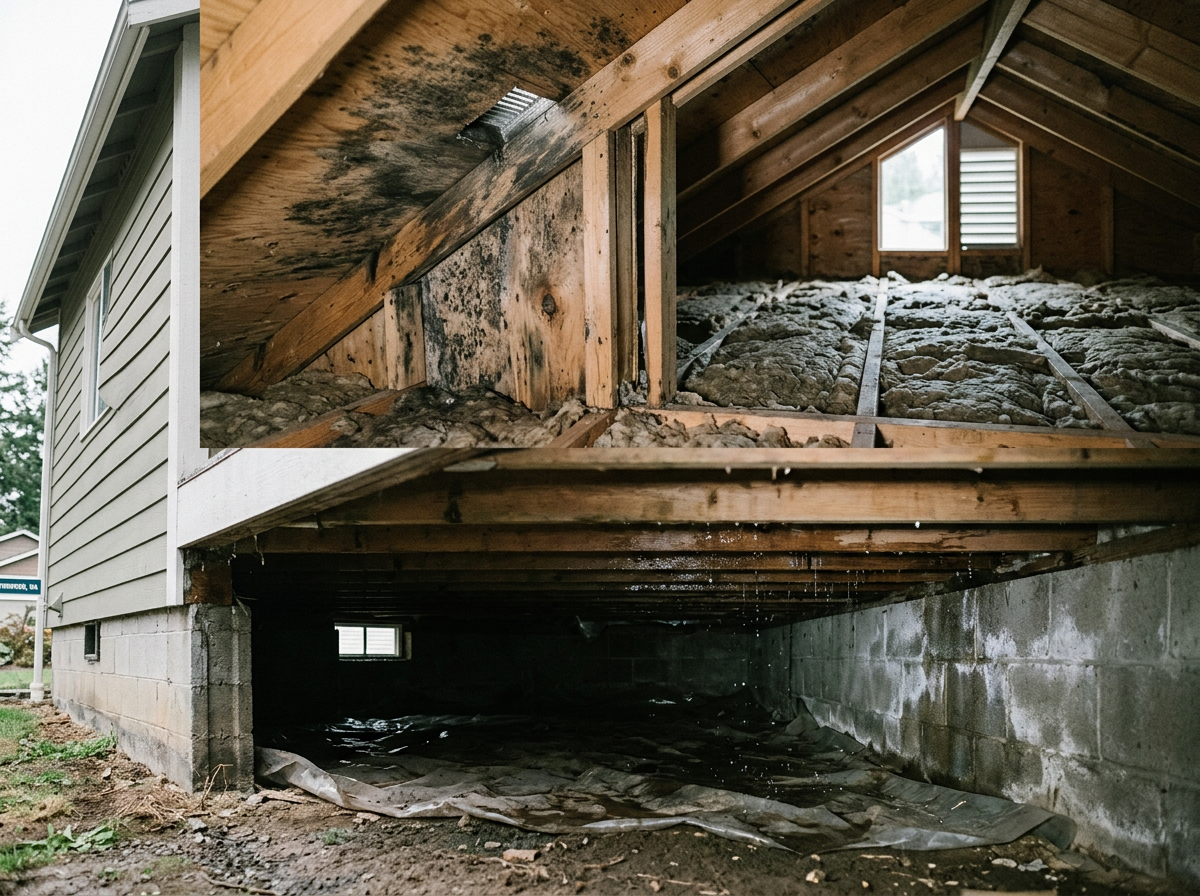
Crawl space moisture in Lynnwood homes travels upward through the stack effect and feeds attic mold growth, particularly when bare soil floors allow continuous vapor release during the nine months of maritime damp conditions west of the Cascades. Warm indoor air rises and pulls that humidity through wall cavities and ceiling penetrations, where it condenses on cooler attic surfaces and supports mold on sheathing and insulation. Blocked soffits and insulation pushed over eaves trap the moisture further, while north-slope staining often marks the first visible signs. Fixing only the attic leaves the source untouched and allows the cycle to repeat.
The Stack Effect in Lynnwood Homes
Lynnwood's mild winters keep indoor temperatures higher than the attic for long stretches, creating steady upward pressure that moves air from the crawl space through the living area. This movement carries water vapor from exposed soil directly into the attic, where it meets colder roof decking and condenses. Homes with unsealed crawl spaces see this airflow increase when bathroom fans or dryer vents exhaust into the attic instead of outside. The result is repeated wetting of insulation and wood without any roof leak present. Addressing the crawl space vapor source reduces the volume of moist air available for the stack effect to carry upward.
Bare Soil and Moisture Migration
Many Lynnwood crawl spaces still have exposed dirt floors that release steady moisture into the air below the house. Without a sealed vapor barrier, this evaporation continues year-round and supplies the humidity that the stack effect transports to the attic. Overlapping seams and wall overlaps of at least 12 inches help block vapor when a barrier is installed, yet many older homes lack this protection. The added humidity also raises relative levels above 60 percent in the crawl, encouraging mold on joists that can later spread through air movement. Sealing the soil surface cuts the moisture load before it begins its upward journey.
Ventilation Failures That Link Crawl and Attic
Blocked soffit vents and insulation covering eaves prevent outside air from diluting crawl space humidity in Lynnwood homes. When soffits are obstructed, the stack effect pulls more interior air upward instead of drawing fresh air from outside. Dryer vents or bath fans routed into the attic add another moisture load that compounds the problem from below. These combined ventilation gaps keep relative humidity elevated in both the crawl and attic, allowing mold to establish on rafters and sheathing. Restoring proper intake and exhaust paths limits how much crawl space air reaches the attic.
Why Cleaning Alone Leaves the Problem Intact
Removing visible attic mold without correcting crawl space moisture sources allows the same conditions to return each damp season in Lynnwood. The stack effect continues to deliver vapor from bare soil, re-wetting surfaces that were just cleaned. A full approach includes sealing the crawl floor and improving ventilation ratios so air movement no longer carries excess humidity upward. Crawl space mold removal paired with moisture control and prevention targets the origin rather than symptoms. Once the upward moisture path is interrupted, attic mold removal can then address remaining growth without immediate recurrence.
Practical Steps Grounded in Local Conditions
Start by inspecting the crawl for exposed soil and checking whether insulation blocks soffits or eaves. Note any bath or dryer vents terminating in the attic rather than outdoors. These observations reveal how much moisture the stack effect can move upward. After sealing the soil with a continuous vapor barrier, confirm that intake vents remain clear and that exhaust paths terminate outside. In homes where insulation has already become wet from this cycle, safe removal of contaminated insulation from Lynnwood attics prevents spores from re-entering living spaces during later work. Consistent attention to the crawl-to-attic airflow path keeps mold from re-establishing under Lynnwood's maritime conditions.