
2026-09-14 ·
Signs Of Attic Mold After Fall Rains In Lynnwood
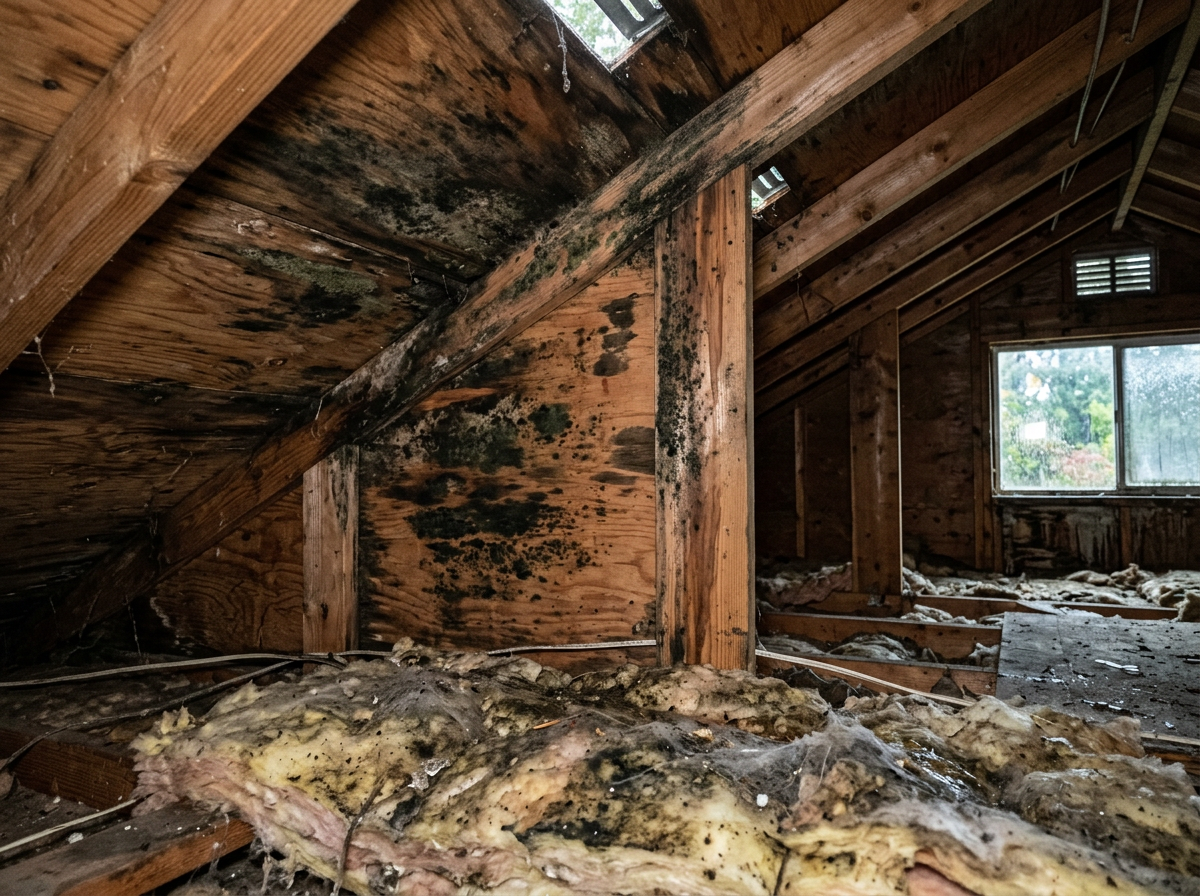
After fall rains, homeowners in Lynnwood often notice dark staining along north-facing roof sheathing or around eaves where insulation has been pushed too far forward. These marks appear because moisture from nine months of maritime damp west of the Cascades has nowhere to escape when bathroom fans or dryer vents discharge directly into the attic instead of outside.
Visible Staining Patterns After Prolonged Rain
North-slope staining shows up first because that side receives the least direct sun, keeping surfaces cooler and more prone to condensation once temperatures drop. Look for gray or black patches that follow the lines of roof rafters rather than spreading randomly across the plywood. Check the area above the bathroom or laundry room where exhaust fans terminate inside the space. Insulation that covers the eaves traps humid air against the sheathing, creating the exact conditions that produce these streaks. Homeowners who open the attic hatch after a week of steady rain can often see moisture beads on the underside of the roof deck in these same locations.
Musty Odors That Worsen With Humidity Spikes
A persistent earthy smell in upstairs rooms or near ceiling registers often points to attic moisture problems that become noticeable once fall rains raise outdoor humidity. The odor intensifies when the stack effect pulls air from lower levels, including bare-soil crawl spaces, upward through the house and into the attic. Closing bedroom doors while the furnace runs can make the smell stronger because pressure changes increase airflow through ceiling penetrations. Residents who notice the odor returns within hours after opening windows should inspect the attic for damp insulation or discolored wood near plumbing vents.
Blocked Soffits and Ridge Vent Problems
Soffit vents covered by insulation or paint prevent the airflow needed to remove moisture that enters through small roof leaks or from indoor humidity. In Lynnwood homes, this issue combines with ridge vents that may be clogged by leaves or excessive insulation at the peak. When soffits are blocked, air cannot enter low and exit high, so any moisture introduced during fall rains stays trapped against the sheathing. Walking the exterior and looking up at the eaves reveals whether screens are clear or packed with debris that stops proper ventilation.
Why Cleaning Alone Allows Regrowth
Removing visible growth without fixing the ventilation failures that caused it leads to the same conditions returning after the next stretch of rain. Attic Mold Removal addresses the current growth, yet source correction through proper fan routing and insulation setbacks prevents recurrence. Improving Attic Ventilation To Reduce Mold Risk In Lynnwood explains how to create the continuous airflow path that keeps sheathing dry. Preventing Mold Regrowth After Attic Repairs In Lynnwood covers the follow-up steps that maintain those conditions over multiple seasons.
When to Schedule an Inspection
Persistent staining, recurring odors, or visible moisture after several days of rain indicate the need for a professional assessment that identifies both the growth and the airflow problems feeding it. Mold Inspection and Testing documents conditions throughout the attic and checks exhaust fan terminations. Addressing these issues before winter sets in reduces the chance that cold weather will lock additional moisture into the insulation.