
2026-09-14 ·
Safe Removal Of Contaminated Insulation From Lynnwood Attics
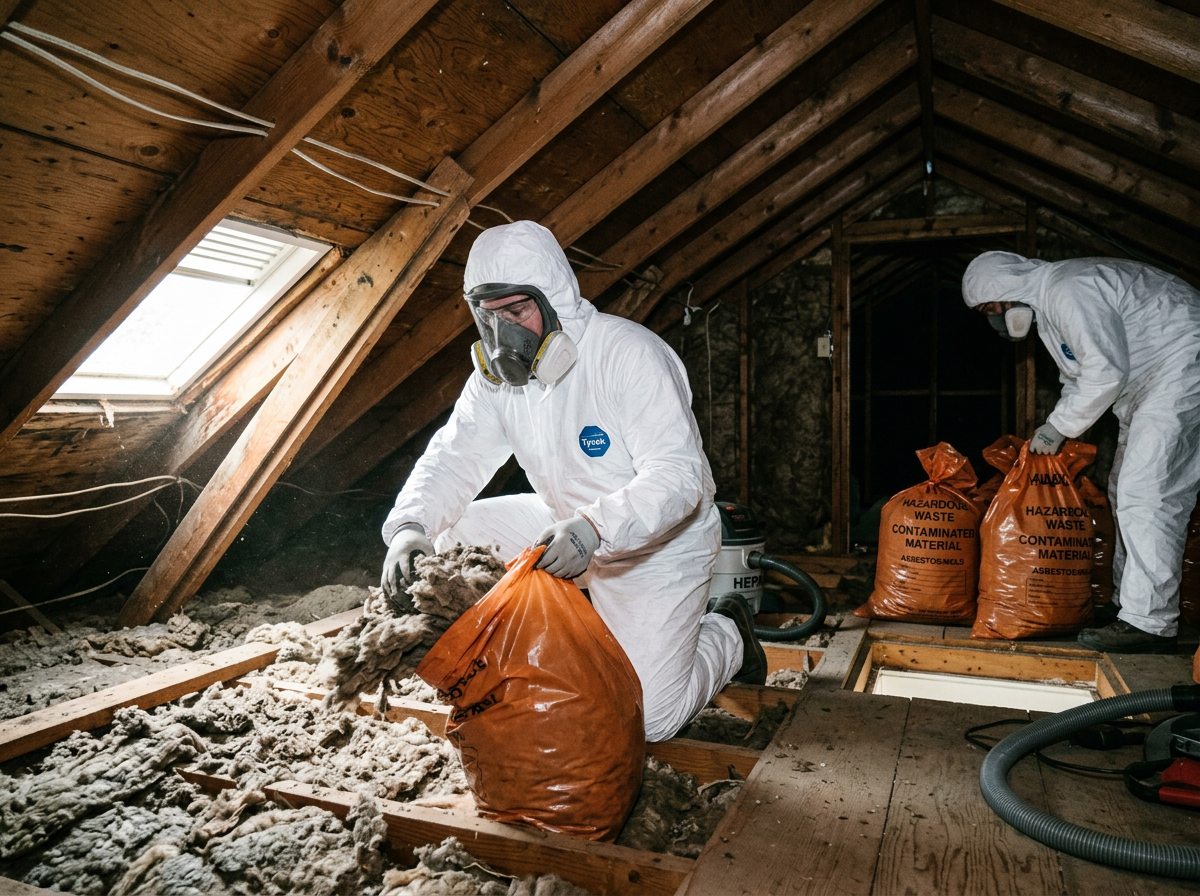
Removing contaminated insulation from Lynnwood attics begins with establishing full containment using plastic sheeting sealed at all seams and negative air pressure with HEPA filtration to keep spores from entering living spaces. Workers wear full PPE and follow a staged approach that removes material in small sections while continuously vacuuming. This method addresses the nine months of maritime damp conditions that allow mold to establish when attic ventilation fails.
Preparing the Work Area
Preparation starts by sealing all access points from the living space and installing temporary barriers around the attic hatch. A HEPA air scrubber runs continuously to maintain negative pressure. Insulation near north-slope staining or areas where fans vent directly into the attic is flagged first because these spots hold the highest moisture loads. Blocking soffits or insulation pushed over eaves is noted so the source can be corrected after removal. All electrical lines are inspected and de-energized where possible to reduce risk during the work.
Step-by-Step Removal Process
Material is cut into manageable sections and placed directly into heavy-duty bags inside the containment zone. Each bag is sealed before it leaves the attic. HEPA vacuums follow behind to capture loose fibers and spores. Bare-soil crawl spaces below often contribute to the stack effect that pulls moist air upward, so crews check for connected airflow paths during removal. Work stops if visible moisture remains on sheathing; the area must dry before insulation is fully cleared. This staged removal prevents re-contamination during the process.
Addressing the Source of Moisture
Cleaning alone fails when ventilation problems persist. In Lynnwood, common fixes include relocating bath and dryer vents to the exterior, clearing blocked soffits, and adding baffles to keep insulation away from eaves. Where north-slope staining appears, additional ridge or gable vents are often needed to restore airflow. Linking to proper moisture control and prevention helps homeowners understand how these changes stop recurrence. Without these corrections, new insulation will face the same conditions within one or two wet seasons.
Disposal and Final Cleanup
Bagged insulation is removed through an exterior exit when possible to avoid dragging material through the home. The attic is then vacuumed a second time with HEPA equipment and wiped down with a damp cloth. All tools and PPE are decontaminated before leaving the containment area. Homeowners can review the attic mold removal page for details on how the full remediation sequence fits together. Final inspection confirms no visible residue remains on rafters or sheathing.
Preventing Recurrence in Lynnwood Homes
After removal, attention turns to ventilation ratios and insulation placement. Maintaining at least 1 inch of clearance at eaves with proper baffles and ensuring ridge vents are unobstructed reduces moisture buildup. Checking for these issues early is covered in the guide How To Check Your Attic For Mold In Lynnwood Homes. Regular visual checks each spring and fall catch new staining before it spreads. Addressing these details keeps the attic dry even during extended periods of maritime damp.