
2026-09-14 ·
Handling Attic Mold After Roof Leaks Common In Lynnwood
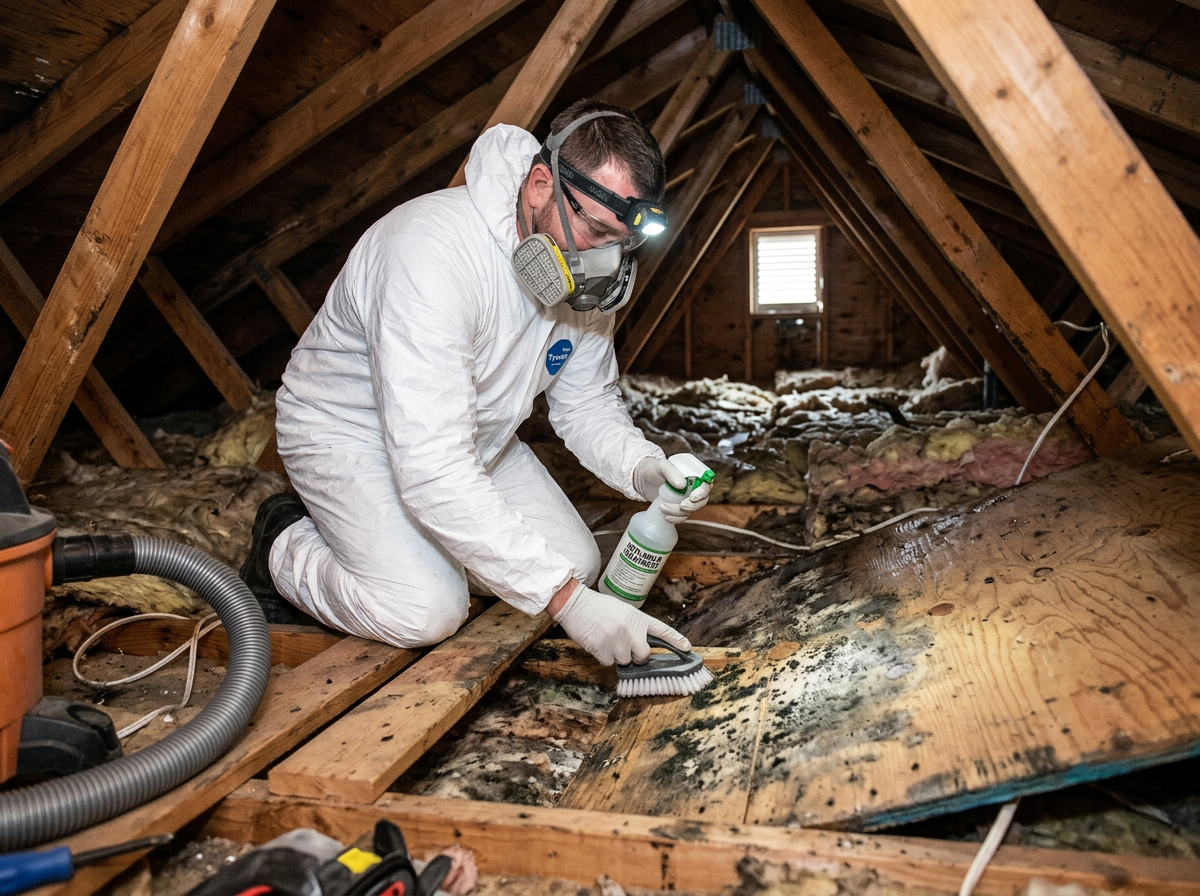
Roof leaks in Lynnwood attics often produce mold when rainwater enters through damaged shingles or flashing and meets the nine months of maritime damp west of the Cascades. Handling begins with stopping the water entry, followed by drying the space and correcting any ventilation shortfalls such as fans vented into the attic or insulation blocking eaves. Without fixing the leak, cleaning alone allows regrowth once humidity rises again.
Recognizing Leak-Related Mold Patterns
North-slope staining on roof decking or insulation often signals repeated moisture from roof leaks in Lynnwood homes. Homeowners may notice dark patches near eaves or around plumbing vents where water has pooled. Bare-soil crawl spaces contribute through the stack effect, pulling humid air upward into the attic during cooler months. Checking for these patterns requires safe access with proper lighting and attention to areas where roof planes meet walls. Documenting visible discoloration helps track whether growth follows leak paths or spreads from mechanical issues like blocked soffits. Local conditions west of the Cascades make even small leaks persistent because outdoor humidity rarely drops low enough for natural drying.
Correcting Roof Leaks and Ventilation Shortfalls
Fixing the roof leak source must precede any mold work in Lynnwood attics. This includes replacing damaged flashing, sealing penetrations, and ensuring gutters direct water away from the foundation. Once the leak stops, ventilation problems such as fans exhausting into the attic or insulation covering eaves require adjustment to restore airflow. In western Washington, where damp conditions last most of the year, these corrections prevent moisture from lingering on wood surfaces. Eastern Washington properties may instead face mechanical failures like exhaust fan misrouting, yet the same sequence applies: stop the water, then improve air movement. Linking attic ventilation improvements to leak repairs reduces the chance that residual dampness restarts growth.
Remediation Steps After Leak Discovery
After leak repair, remove wet insulation and discard it to eliminate saturated material that harbors mold. Clean affected roof decking and framing with methods suited to wood surfaces, then allow thorough drying before reinstalling insulation. In Lynnwood homes, this process often reveals how blocked soffits or ridge vent gaps have trapped moisture from even minor roof seepage. Professional attic mold removal services address hidden areas around rafters that homeowners cannot safely reach. The work stays focused on the attic envelope rather than living spaces below. Re-inspection confirms the space has returned to dry conditions consistent with surrounding outdoor air.
Preventing Future Growth Through Moisture Control
Ongoing prevention in Lynnwood centers on maintaining roof integrity and attic airflow year-round. Regular checks for new leaks, especially after winter storms, catch issues before water reaches insulation. Adding or adjusting vents to meet local building ratios helps move moist air outward instead of allowing it to condense on cold surfaces. Moisture control and prevention measures also include keeping crawl space soil covered so less humidity rises through the stack effect. These steps work together because roof leaks alone do not create mold when ventilation keeps surfaces dry. Homeowners who combine leak repairs with these adjustments see fewer repeat problems in the region's maritime climate.
Local Resources for Attic Mold Concerns
Washington Mold Solutions at 19921 68th Ave W Ste 103, Lynnwood, WA 98036 assists homeowners dealing with leak-related attic mold across the area. Guidance on inspection and testing helps determine the extent of growth tied to specific roof failures. Related reading on how to check your attic for mold in Lynnwood homes provides practical next steps for early detection. Improving attic ventilation to reduce mold risk in Lynnwood offers details on airflow corrections that support leak repairs. These resources focus on practical source correction rather than temporary cleaning.