
2026-09-14 ·
Local Climate Patterns That Increase Attic Mold In Lynnwood
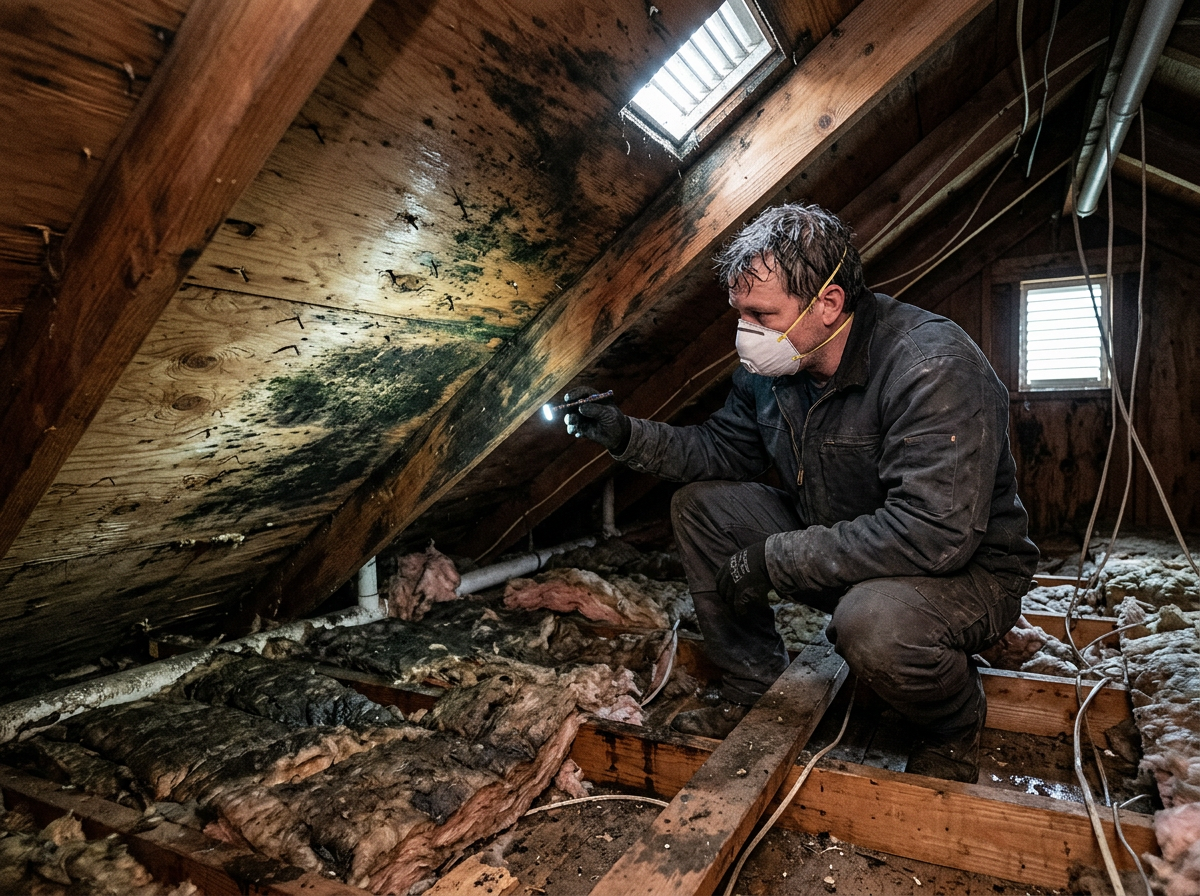
Lynnwood's position west of the Cascades brings roughly nine months of maritime damp conditions that raise attic humidity when ventilation fails, directly increasing mold risk in homes where fans vent into attics or soffits stay blocked.
Pacific Moisture and North-Slope Condensation
Lynnwood receives steady marine air that keeps relative humidity elevated through fall, winter, and spring. When roof sheathing cools on north-facing slopes, this moisture condenses against under-insulated surfaces and creates dark staining patterns visible from the street. Blocked soffits and insulation pushed over eaves stop airflow, so the attic cannot dry between rain events. Homes built before modern ridge-vent standards often show these signs first because original designs assumed more natural air movement than current tight construction allows. Checking for these patterns early prevents the need for full attic mold removal later.
Stack Effect from Bare-Soil Crawl Spaces
Many Lynnwood properties sit above crawl spaces with exposed soil that feeds warm, moist air upward through the stack effect. This air rises into the attic during colder months, adding humidity that standard roof vents cannot exhaust fast enough. The result is repeated wetting and drying cycles on wood framing that favor mold colonies on north slopes and around penetrations. Addressing crawl-space moisture through proper barriers and ventilation reduces the load on attic systems and limits regrowth after any remediation work.
Eastern Washington Contrast and Mechanical Causes
East of the Cascades the climate turns arid, yet Lynnwood-area homes can still develop attic mold when mechanical issues override the dry pattern. Dryer vents routed into attics, bathroom fans terminating short of the roof, or ridge vents clogged with debris create localized humidity pockets even during summer months. These failures mirror the maritime problems seen west of the mountains and require the same source correction to stop cycles of growth. Homeowners in Snohomish County neighborhoods notice the difference most clearly after roof work or insulation upgrades that inadvertently seal off airflow paths.
Practical Steps for Local Homeowners
Start by inspecting attic ventilation ratios and confirming that every exhaust fan terminates outside the roof plane. Look for insulation gaps at the eaves and ensure soffit vents remain clear of debris or new roofing layers. When staining appears, document the locations and consider a professional assessment through mold inspection and testing before attempting cleaning. Linking these checks to ongoing moisture control and prevention measures keeps the attic drier through the long wet season typical of Lynnwood.
For readers ready to evaluate their own attics, the guide on how to check your attic for mold in Lynnwood homes walks through safe inspection steps. Those who have already completed repairs can review preventing mold regrowth after attic repairs in Lynnwood to maintain the fixes. When source correction is needed, attic mold removal services address both the visible growth and the ventilation shortfalls that allowed it.