
2026-09-14 ·
Drying Out An Attic After A Lynnwood Plumbing Leak
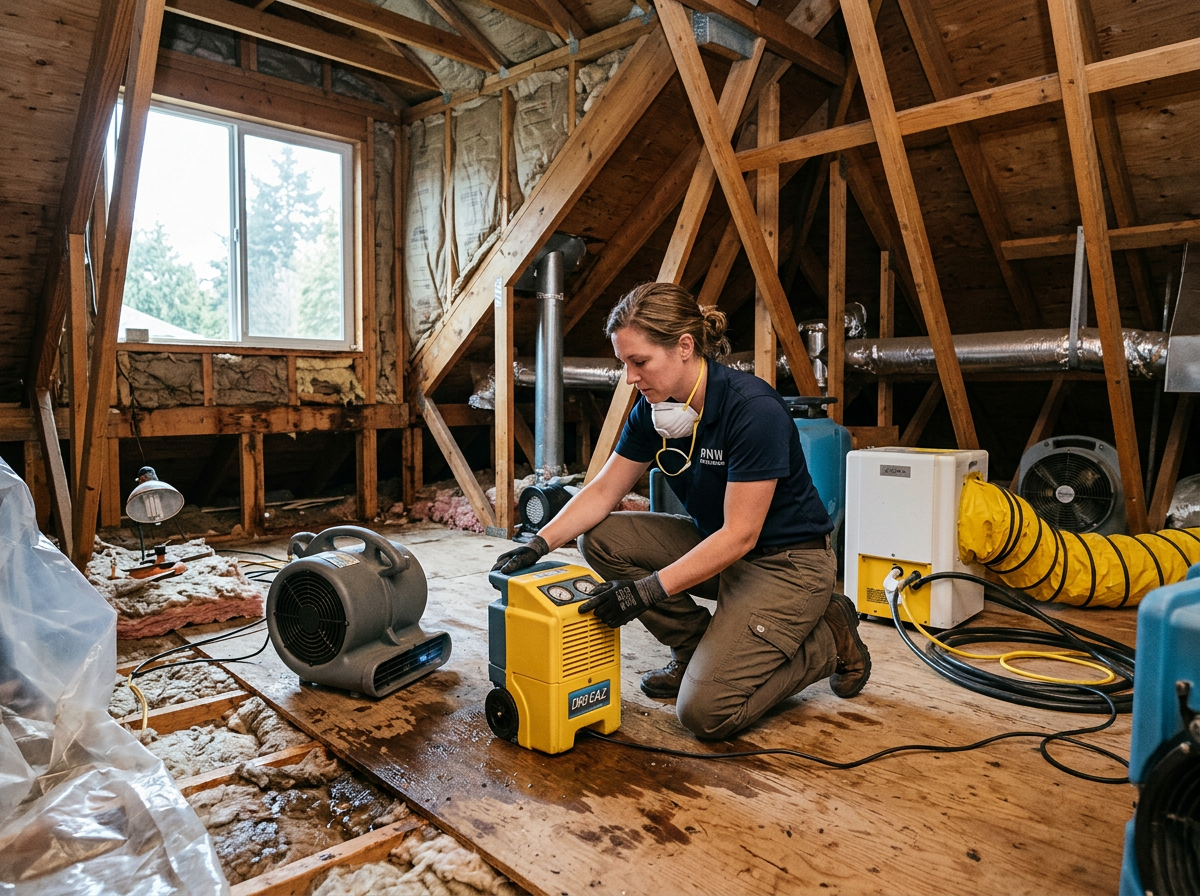
Drying an attic after a Lynnwood plumbing leak requires running commercial dehumidifiers and air movers for 5 to 10 days while keeping indoor relative humidity below 50 percent at temperatures between 70 and 80 degrees Fahrenheit. Start by locating the leak source, often a pipe joint or roof penetration, then isolate the wet insulation and sheathing. In western Washington homes, the stack effect pulls moist air upward from bare-soil crawl spaces, so sealing those lower levels speeds the process. Once water is extracted, focus shifts to restoring airflow that north-slope roofs and blocked soffits commonly restrict.
Assessing Water Intrusion and Insulation Condition
Begin by cutting small inspection holes in the ceiling below the leak to check how far water traveled along rafters and into insulation batts. Plumbing leaks in Lynnwood attics frequently soak fiberglass or cellulose within a 4-foot radius of the drip point, and saturated material must be removed before drying equipment can reach the sheathing. Measure moisture content with a pin meter at multiple spots; readings above 18 percent indicate sections that need extraction rather than air drying alone. Check for staining on oriented strand board or plywood, which signals prolonged exposure common during the region's extended wet seasons. Document every affected rafter bay so follow-up work targets only the damaged zones.
Setting Up Equipment for Controlled Drying
Place one or more dehumidifiers rated for at least 70 pints per day on the attic floor, ducting exhaust air out a gable vent when possible. Position air movers to create a circular pattern that lifts moisture from sheathing toward the ridge without forcing it into wall cavities. In Lynnwood homes, where maritime air keeps outdoor humidity near 70 percent for months, seal off the attic from living spaces with plastic sheeting and negative pressure to prevent mold spores from migrating downward. Run equipment continuously, emptying collection tanks twice daily, and rotate fans every 24 hours to expose all surfaces. This setup counters the ventilation failures that occur when bathroom fans vent directly into attics instead of through the roof.
Monitoring Progress and Adjusting for Local Climate
Check moisture levels every 48 hours with the same pin meter used initially, aiming for readings under 12 percent before stopping equipment. Western Washington's nine months of damp weather means outdoor air alone cannot finish the job; supplemental heat at 75 degrees Fahrenheit helps evaporate residual water trapped under insulation edges. Watch for condensation on north-facing rafters, a sign that soffit vents remain blocked by insulation or debris. Adjust dehumidifier settings downward only after three consecutive days show stable low readings. Once dry, replace any removed insulation with material that maintains at least 6 inches of clearance at the eaves for future airflow.
Fixing the Root Ventilation Problems
Plumbing leaks often reveal existing issues such as insulation covering eave vents or ridge vents clogged with debris. Clear soffit openings to a minimum 1-inch gap along the full length of the eaves, then verify that any power attic fan is ducted through the roof rather than dumping moist air inside. In Lynnwood, the stack effect from crawl spaces can reintroduce humidity unless a 6-mil vapor barrier overlaps seams by 12 inches and seals to the foundation walls. These corrections prevent the cycle where cleaning alone fails because moisture returns through the same paths. Moisture Control and Prevention outlines additional steps for homes with similar construction.
Next Steps After the Attic Is Dry
Once moisture readings stabilize, inspect for any remaining discoloration that may require professional attention. Attic Mold Removal addresses cases where staining persists beyond simple drying. Review the full attic for other leak points, especially around plumbing vents and skylights common in Lynnwood construction. How To Check Your Attic For Mold In Lynnwood Homes provides a repeatable inspection routine. Finally, read Preventing Mold Regrowth After Attic Repairs In Lynnwood to maintain the dry conditions achieved.