
2026-09-14 ·
Insulation Replacement Following Attic Mold Removal In Lynnwood
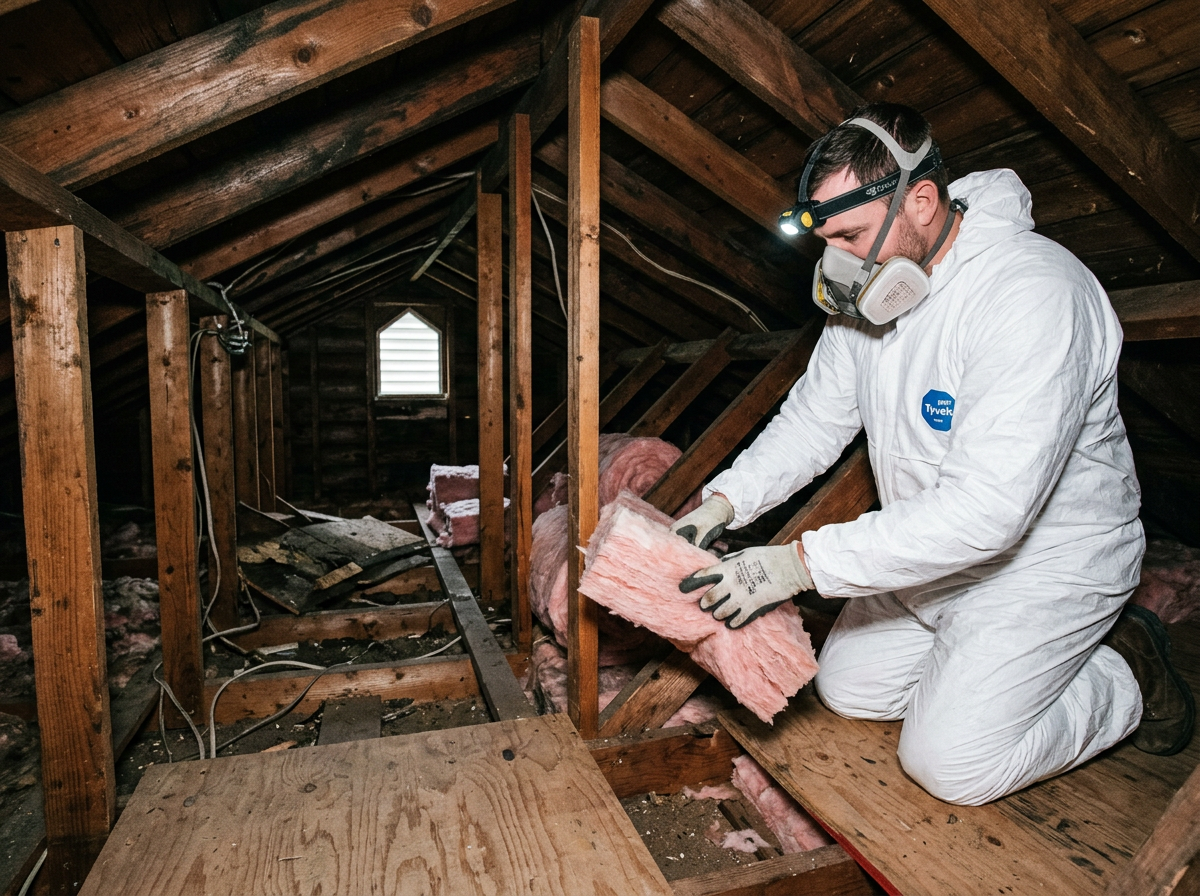
In Lynnwood attics, insulation replacement after mold removal begins once the affected sections are identified and the ventilation failures that allowed moisture buildup are corrected. Homeowners west of the Cascades often see fiberglass or cellulose matting saturated from roof leaks or poor airflow, requiring full removal of the damaged layers before new insulation can be installed. The process ties directly to fixing issues like fans venting into the attic space or insulation blocking soffit vents.
Identifying When Insulation Must Be Replaced
Attic mold removal in Lynnwood frequently reveals insulation that has absorbed enough moisture to support growth along north-facing slopes. Bold staining on rafters or compressed batting indicates the material can no longer perform its thermal role and must come out entirely. West of the Cascades, nine months of maritime damp air makes it common for bare-soil crawl spaces to push humid air upward through the stack effect, saturating attic layers over time. Replacement only proceeds after source correction, because cleaning alone leaves the conditions that caused the problem in the first place. Readers can review typical inspection points in What Home Inspectors Look For In Lynnwood Attics to understand what professionals check during an initial visit.
Removing Contaminated Insulation
Once mold remediation crews finish containment and cleaning, the next step is systematic removal of the saturated insulation. Workers cut away sections in controlled passes, bagging material immediately to limit airborne particles. In Lynnwood homes, this often includes clearing insulation that has been pushed over eaves or packed against blocked soffits, restoring proper airflow paths. The address at 19921 68th Ave W Ste 103, Lynnwood, WA 98036 serves as the base for crews handling these projects across Snohomish County. After removal, the attic is left open for inspection to confirm no residual growth remains on wood surfaces before new material is introduced.
Correcting Ventilation Before Reinsulating
Insulation replacement cannot succeed without addressing the mechanical or design flaws that created the mold. Common fixes include rerouting bathroom and dryer exhausts directly outdoors, clearing blocked soffit vents, and ensuring ridge vents maintain adequate ratios for the attic volume. In eastern Washington the cause is often mechanical rather than climate-driven, while Lynnwood properties contend with persistent outdoor humidity that enters through unsealed penetrations. Installing a vapor barrier with 12-inch overlaps on the crawl space floor helps reduce the stack effect that feeds attic moisture. See Moisture Control and Prevention for related approaches that pair with attic work.
Installing New Insulation After Source Correction
New insulation is added only after ventilation is restored and surfaces are dry. Installers typically use unfaced fiberglass batts or blown cellulose calibrated to local code depths, keeping material away from eave edges to preserve airflow. In Lynnwood attics this step follows confirmation that fans no longer discharge into the space and that north-slope areas receive adequate circulation. The replacement restores thermal performance while the corrected airflow prevents the damp conditions that previously allowed mold to establish. Homeowners can learn more about seasonal patterns in Why Lynnwood Attics Develop Mold During Winter.
Ongoing Monitoring in Washington Attics
After insulation replacement, periodic checks help confirm that ventilation remains unobstructed and moisture levels stay controlled. Lynnwood residents benefit from inspecting soffit and ridge openings each spring and fall, clearing debris that could re-create the blocked conditions that led to the original problem. When attic mold removal and subsequent insulation work are completed together with these adjustments, the attic regains its intended function without repeated interventions.