
2026-09-14 ·
What Home Inspectors Look For In Lynnwood Attics
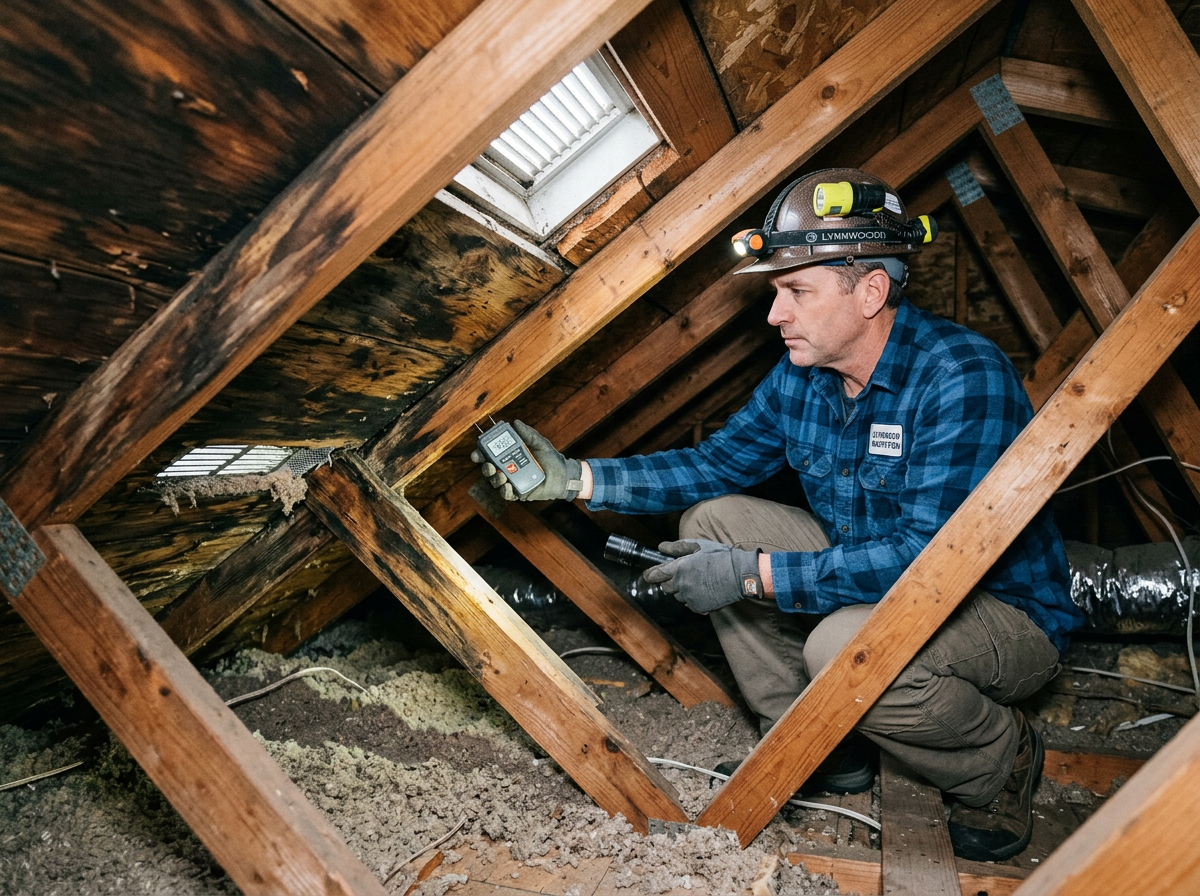
Home inspectors in Lynnwood attics start by verifying whether bathroom and kitchen exhaust fans terminate outside rather than into the attic space, then look for blocked soffits, insulation covering eaves, and dark staining along the north roof slope where moisture lingers longest.
Ventilation Path Checks
Inspectors trace every exhaust line to confirm it exits through the roof or gable rather than dumping warm, moist air into the attic. They measure soffit openings to ensure air can enter freely and check that ridge or roof vents allow that air to leave without obstruction. When fans vent indoors or soffits are covered, the resulting humidity stays trapped against sheathing for months. These patterns appear routinely in Lynnwood because the marine air west of the Cascades keeps relative humidity elevated from October through June. Inspectors also note whether gable-end vents are screened and clear of insulation debris.
North-Slope and Sheathing Evidence
Dark staining or water marks along the north-facing roof plane signal repeated condensation cycles that inspectors flag immediately. They lift insulation batts to inspect plywood or OSB for discoloration and probe rafters for softness. Because the north slope receives the least direct sun, any moisture introduced by poor venting remains longest there. Inspectors compare this area against south slopes to confirm the pattern is ventilation-related rather than a roof leak. Homeowners can review similar seasonal patterns in the article on seasonal attic inspections for Lynnwood residents.
Insulation and Eave Blockages
Inspectors check that insulation stops short of the eaves so air can flow from soffits along the underside of the roof deck. When batts or blown-in material extend over the top plates, they block the intake path and create dead-air pockets. They also look for recessed lights or other penetrations that allow conditioned air to leak upward, carrying additional moisture. In Lynnwood homes these gaps often develop after DIY insulation projects that did not preserve the required ventilation channel.
Crawl Space and Stack-Effect Links
Inspectors note whether the home has a bare-soil crawl space because negative pressure from the stack effect pulls ground moisture upward into the attic. They check for missing or torn vapor barriers and open foundation vents that allow humid air to rise through wall cavities. Addressing these lower-level sources often requires separate crawl space mold removal work before attic conditions can be stabilized. Without correcting the pathway, surface cleaning alone leaves the same moisture load in place.
Mechanical Causes East of the Cascades
Although Lynnwood sits west of the mountains, inspectors still ask about any recent dryer or bath-fan work because mechanical failures can create mold even in drier climates. They verify that all exhaust ducts remain intact and properly terminated. When the cause is purely mechanical rather than climate-driven, the same inspection steps apply but the timeline for visible growth shortens once the fan or duct issue is fixed.
After noting these items, inspectors often recommend a targeted mold inspection and testing visit followed by source correction through attic mold removal and ongoing moisture control and prevention. Readers can also learn practical next steps in the article on preventing mold regrowth after attic repairs in Lynnwood.